How a Builder Can Beat Your Listing by $431 a Month
|
|
Welcome to the fifth NREB Premium briefing. This one is about a competitor many listing agents overlook, and a number buyer agents can use more deliberately. It is the same number in both cases, and right now it is one of the most decisive figures in residential real estate.
|
|
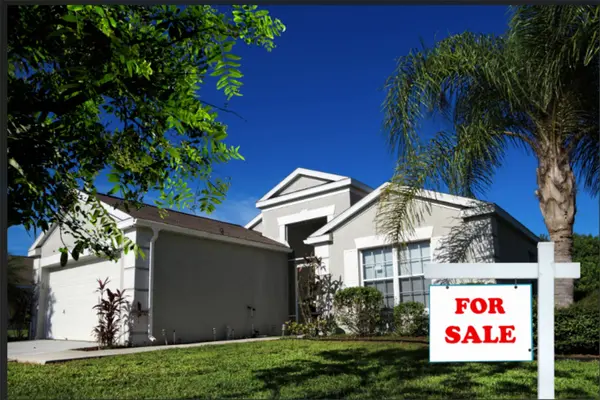
Here is the situation. Your seller's home sits at $450,000. Four miles away, a national builder has a spec home at the same price. On paper they are competitors on price. In reality, they are not competing on price at all, and the builder knows it. The builder is competing on the monthly payment, using a tool your seller does not know exists and would not know how to counter if they did. This issue is that counter, with the exact math.
|
|
NREB Premium members: this week's full payment math, scripts, and client materials continue below the break as always. If you're not a member yet and already know this issue is for you, you can join here and read straight through.
|
What the market is actually doing
|
|
Start with how widespread this has become, because it is no longer a niche tactic.
|
|
In July, 63% of home builders reported using sales incentives, according to the NAHB/Wells Fargo Housing Market Index. That is the sixteenth consecutive month that share has been at 60% or higher. Meanwhile 37% reported cutting prices, with an average reduction of 6%. Read those numbers together and you see the builders' actual playbook: price cuts are the minority move, incentives are the default, and the flagship incentive is the financed mortgage rate.
|
|
The scale is easiest to see at the top. On its July earnings call, D.R. Horton, the country's largest builder, reported that buyers in its backlog using the company's mortgage operation carried an average rate of 4.9% as of June 30, against what the company called a rough market rate of about 6.5%. It said the largest portion of its current offerings runs from roughly 4.99% to 5.5% depending on the mortgage product, and that 65% of its mortgage closings in the quarter went to first-time buyers. These offers are real, but they come with real conditions: they apply to select homes, usually require the builder's affiliated lender, often carry closing deadlines, and are always subject to borrower qualification. They are not a market rate. They are a marketing budget wearing a rate costume.
|
|
Builders structure it this way for their own reasons: a dollar spent on the rate moves a buyer's payment further than a dollar off the price, it can turn an unqualified buyer into a qualified one, and it keeps the community's recorded contract prices intact, which matters to their margins and their future phases. One important nuance for agents, and it is the same one from our concessions issue: financing concessions are disclosed, and appraisers are required to analyze their effect on comparable sales, so the recorded price staying higher does not mean the concession is invisible to the market.
|
|
Meanwhile, the resale side of the street is working with a 30-year fixed that Freddie Mac put at 6.66% for the week of July 30, up from 6.58% the week before. Your resale buyer is shopping near 6.66%. The builder's buyer might be shopping at 4.99%. Same town, same week, same price point.
|
|
|
The gap, in real numbers
|
|
Here is a clean financing-only illustration using the same price, the same down payment, the same loan amount, and the same 30-year term on both sides. It is not a matched pair of actual loan quotes; the purpose is to isolate what the interest-rate difference alone does to principal and interest. Take a $450,000 price, 10% down, a $405,000 loan.
|
|
The resale buyer at 6.66% pays about $2,603 a month in principal and interest.
|
|
The builder's buyer with a 4.99% permanent buydown pays about $2,172.
|
|
That is a gap of roughly $431 a month, about $5,200 a year, on identical purchase prices. At the top of D.R. Horton's stated band, 5.5%, the gap is still about $303. Two labels matter before you use these numbers with a client. First, this is principal and interest only, not a total-payment comparison: taxes, insurance, mortgage insurance, HOA dues, special assessments, and lender fees can differ materially between a new-construction home and a resale, sometimes by a lot, and in either direction. Second, these examples use a permanent buydown, a rate that lasts the life of the loan. Some builder promotions are temporary buydowns instead, teaser rates for the first one to three years that then step up. Comparing a first-year teaser payment against a resale buyer's permanent payment is not a fair comparison, and any agent who makes it will get taken apart by a sharp client. Always ask which kind the builder is offering, and compare the rate that lasts.
|
|
Now here is the expensive misunderstanding, and it is happening at listing appointments all over the country this month. When a resale listing loses a buyer to new construction, the reflex is to cut the price. Run that reflex through the same math.
|
|
Suppose your seller matches the builders' average and cuts 6%. On the $450,000 home, that is a $27,000 reduction, bringing the price to $423,000. With the same 10% down at the same 6.66%, the buyer's principal-and-interest payment drops to about $2,446.
|
|
Twenty-seven thousand dollars off the price bought your seller about $156 a month.
|
|
The builder, at the same list price, is offering roughly $431 a month.
|
|
That is the problem in two lines. Your seller can give up $27,000 of price and still trail the payment comparison by nearly three hundred dollars a month, because in this illustration, a price cut moves the monthly principal-and-interest payment far less efficiently than a rate-focused alternative. The builder may be winning even when the price is not lower, because it is pulling a financing lever your seller has never been shown.
|
|
Which raises the question that actually decides these deals: what can your seller do with those same dollars instead, how far does each option close the $431 gap, and at what cost? The short version is that for roughly one-third of that price cut, a seller can fund a structure that beats the builder's payment in year one, when many buyers are also absorbing moving and setup costs, and there is one qualification rule that determines which structure a lender will even count.
|
|
Below the break: the full table showing what each option costs your seller and how far it narrows the builder's advantage, including the honest number for where full matching stops being worth it, the underwriting rules that decide which buydowns count toward qualification, the listing-side script for the seller losing showings to new construction, the buyer-agent playbook for negotiating with and against builders, the section on when a price cut genuinely is the right move, the four objections, an honest new-versus-resale one-pager for clients, and the fifteen-minute audit that tells you how much builder competition your listings actually face….
|
|