

Fall rental deals are still out there, but demand is rising

Fall rental deals are still out there, but demand is rising
Rental demand is up 19.2% from a year ago as buyers priced out by mortgage rates join the market

Key takeaways
- Demand for rentals on Zillow is up 19.2% from a year ago, and demand for single-family rentals (up 21.6%) is growing more than twice as fast as demand for apartments (up 10.1%).
- Renter demand is up 43% or more in Austin, Miami and Phoenix, but new construction has held rent growth there to 1.8% or less, while rents in San Francisco and San Jose are up 11.8% and 8.3%.
- Winter is usually the easiest time to negotiate a lease, but renters who plan to move in the coming months may want to start shopping before that leverage shrinks.
Renters usually hold the upper hand in fall and winter. Fewer people move in the cold months, property managers with empty units become more flexible, and deals follow. This year, that pattern may not hold.
Zillow's Observed Renter Demand Index, which tracks how much attention rental listings get on Zillow, is up 19.2% from a year ago. The cause sits in the for-sale market. The typical new homebuyer's monthly payment is $3,037, up 5% over the past year, while the typical rent of $1,932 is up 2.7%. Buying now costs about $1,100 a month more than renting, and shoppers who can't make that work are looking at rentals instead.
The rental market is starting to respond. September's 0.1% monthly increase beat the pre-pandemic norm of 0% for the month, and annual growth edged up to 2.7% from 2.5% in Zillow's August rental report. Those are small moves, but they point toward a market that is tightening.
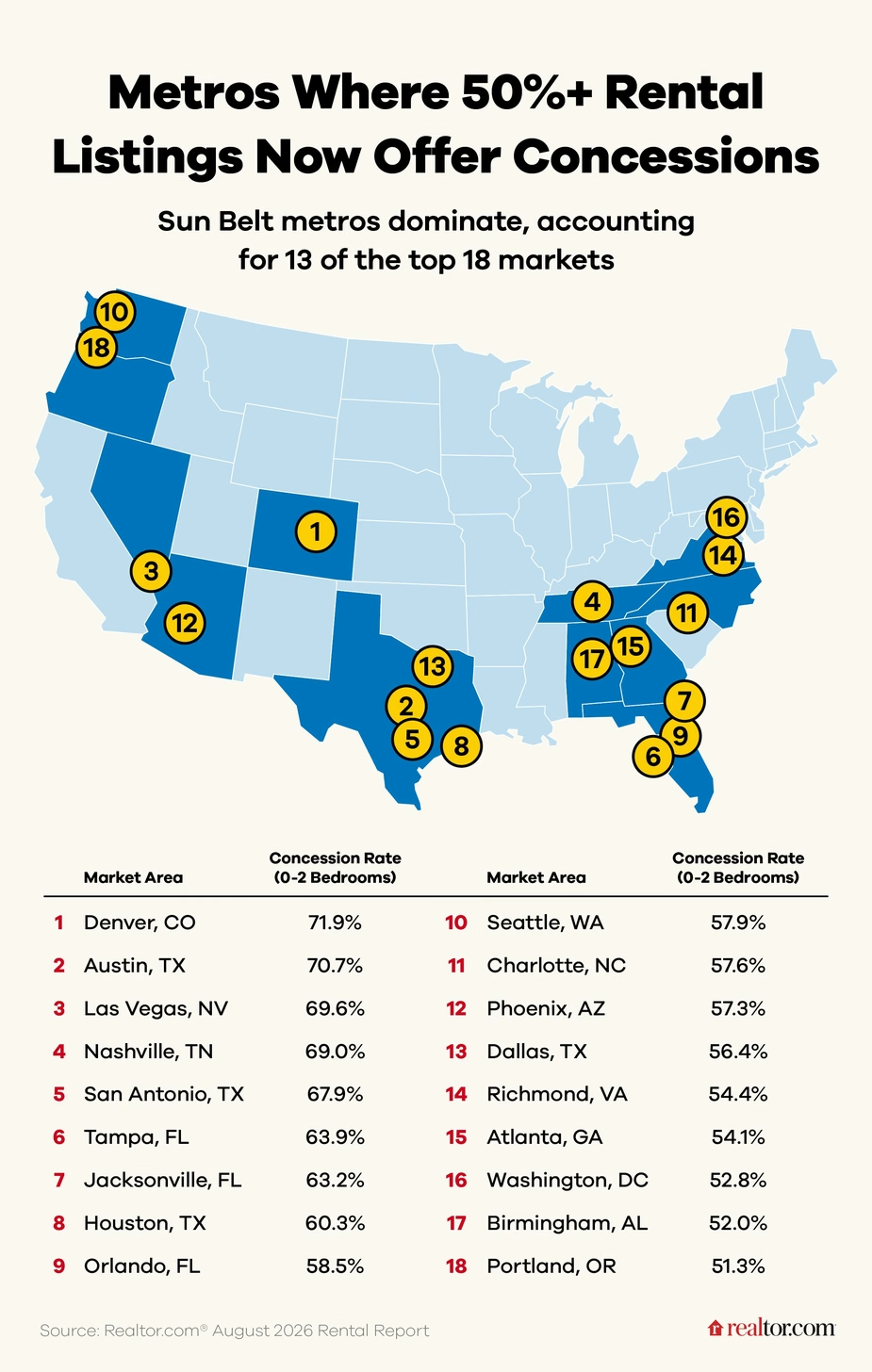
Renters still have some room to bargain. In September, 39.6% of rentals on Zillow offered a concession such as a free month or reduced fees, 2.2 percentage points more than a year ago. But "those deals were priced when demand was softer," said Mischa Fisher, chief economist at Zillow. "As more shoppers pile in, and as rent growth accelerates, property managers have less reason to keep offering them."
Where new apartments went up, rents held steady
Renter demand rose the most in San Jose (up 82.5%), San Francisco (up 66.9%), Austin (up 49.3%), Miami (up 48.9%) and Phoenix (up 43%). But rental prices didn't rise in all those markets. In San Francisco and San Jose, rents are up 11.8% and 8.3% over the past year. In Austin, Miami and Phoenix, they are up 0.7%, 1.8% and 1%, because new construction has kept supply in step with demand.
Apartment completions hit a 38-year high in 2024, and the extra supply has kept vacancies elevated and prices soft. "That trend is fading," Fisher said. "Property managers who position themselves well now will be better placed as conditions tighten over the next year or two."
Single-family rents are up from a year ago in all 50 of the largest metros, and demand for them is growing more than twice as fast as for apartments. A typical rental house costs $2,266 a month. Owning one would cost $771 more once taxes and insurance are included.
Shopping for a rental in a tighter market
Renters should start with what they can afford, which varies widely by market. The median household spends 26.3% of its income on a new rental, about the same as a year ago, and it takes an income of $77,278 to afford a typical rental, up 2.9% from last year. Rent takes the smallest share of income in Austin (18.1%), Raleigh (18.2%) and Salt Lake City (18.3%), and the largest in New York (39.7%), Miami (36.6%) and Los Angeles (33.7%). Zillow's rent affordability calculator helps renters turn their income into a monthly budget before they start searching.
Zillow Rentals puts apartments, houses and rooms for rent in one search, and every listing includes a Costs & Fees section that shows move-in and monthly costs. Zillow's rental application lets renters apply to as many participating properties as they need with one form, one flat fee and 30 days to apply. That can cut the upfront cost of a competitive search.
Leverage also depends on where renters are looking. The share of listings offering concessions is up the most from a year ago in Cincinnati (12.8 percentage points), Indianapolis (9.2), St. Louis (8.4), Las Vegas (8) and Houston (7.5), which makes those markets a reasonable place to ask for a free month or reduced fees.
"There are still deals to be had this winter, but they may not last as long as they used to," Fisher said. "If you're planning a move, don't wait. Before you sign, ask what's on the table, whether that's a free month, lower fees or a lower asking rent."
Categories
Recent Posts






Concierge Realtor/Senior Account Executive License ID: 3370040
+1(954) 258-4926 | larry@lheringrealty.com